Korçë, Albania | 10–11 November 2026
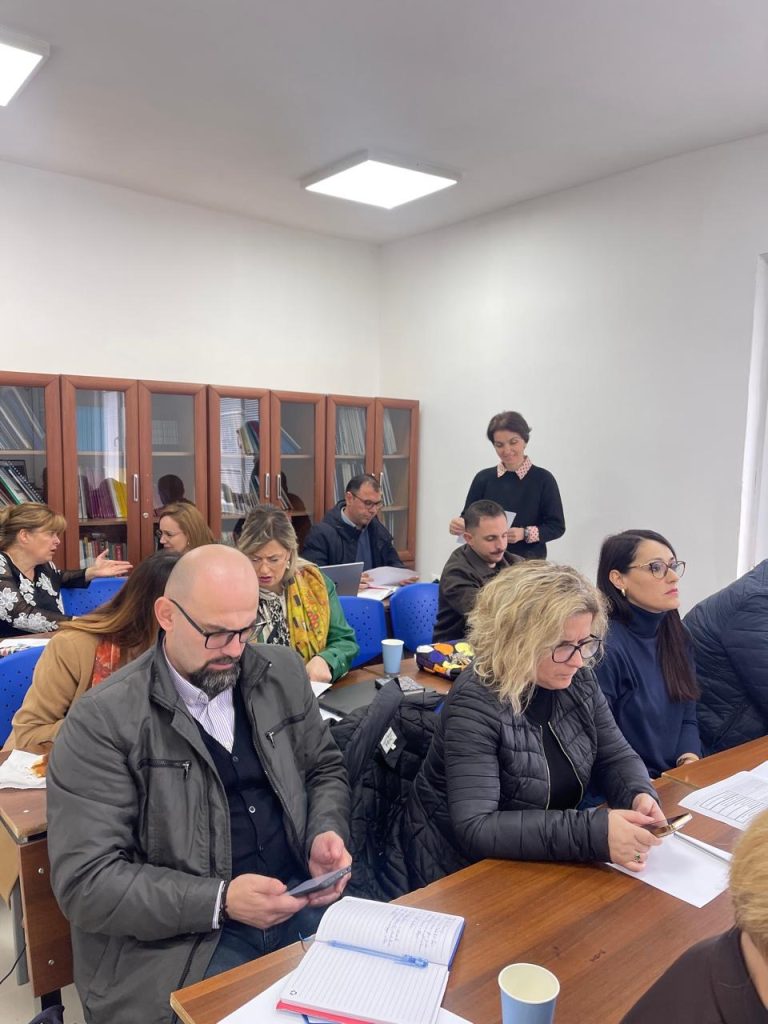
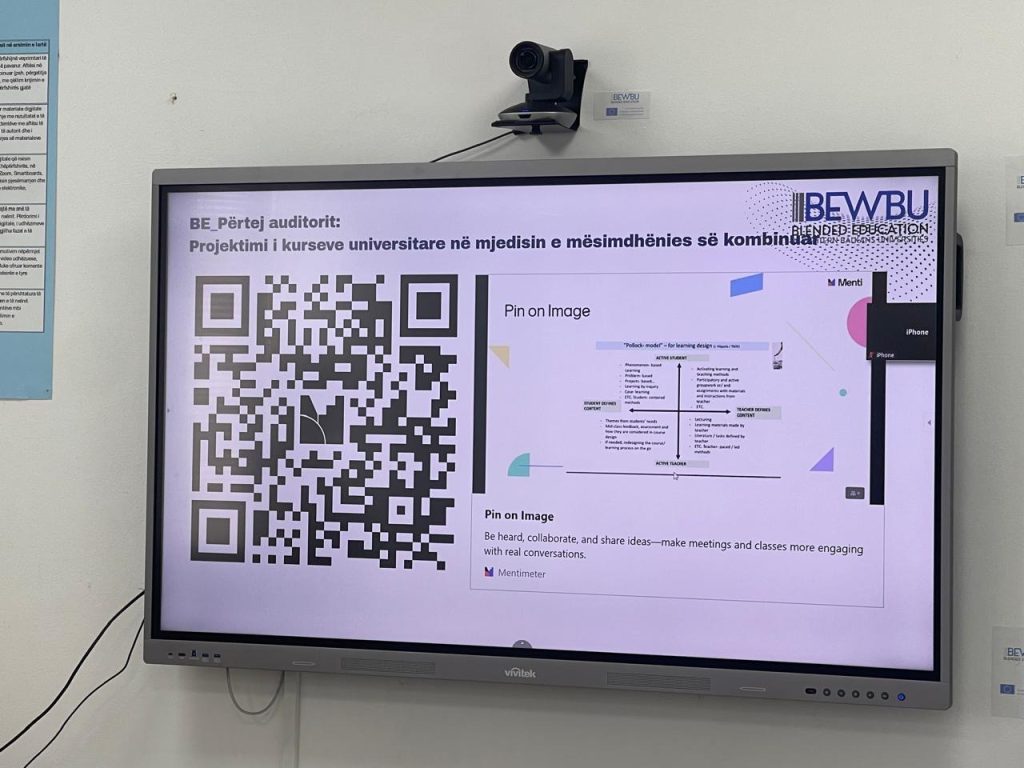
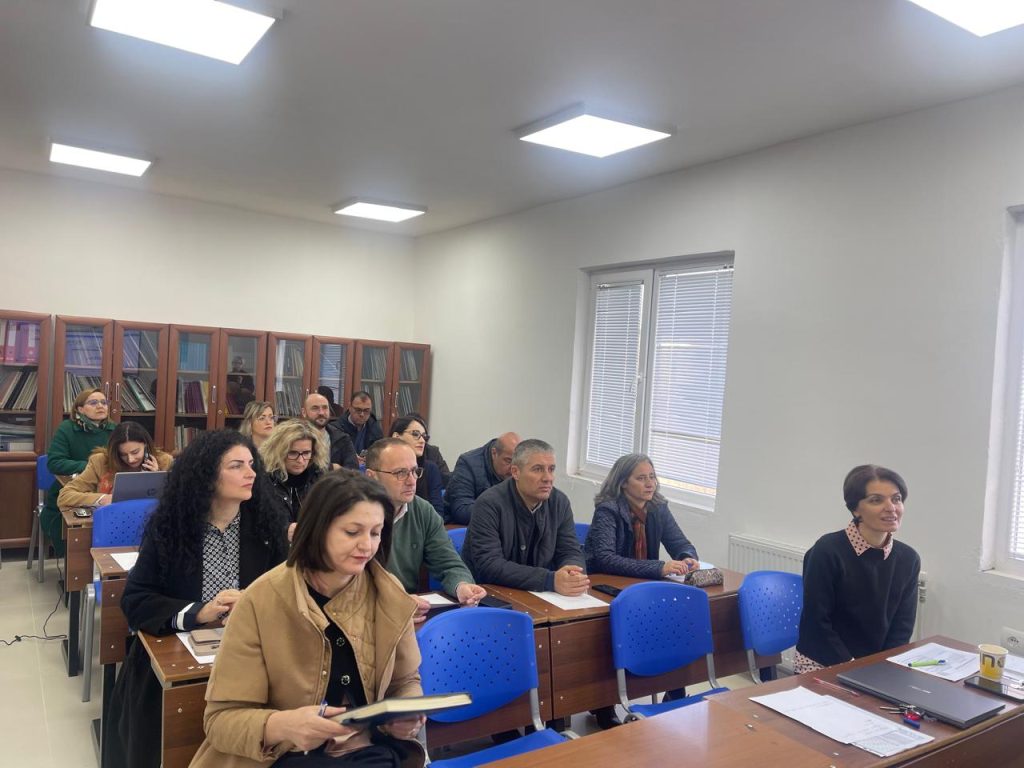
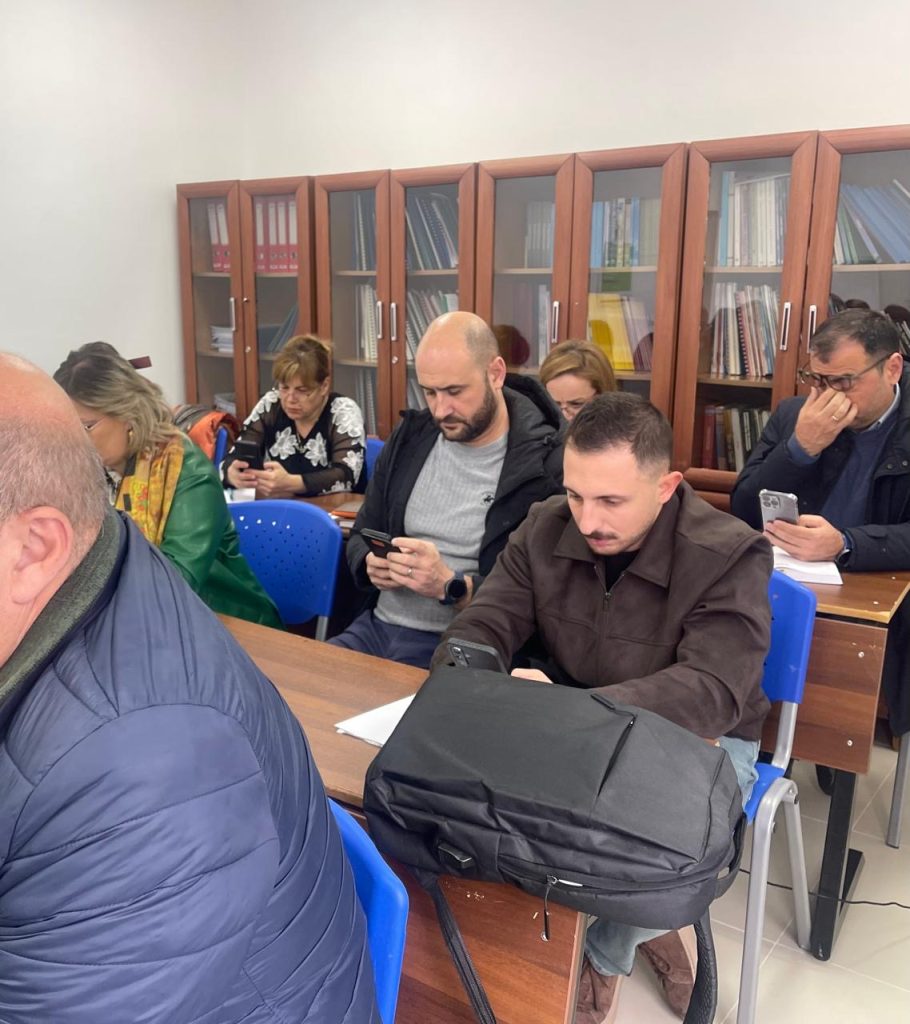
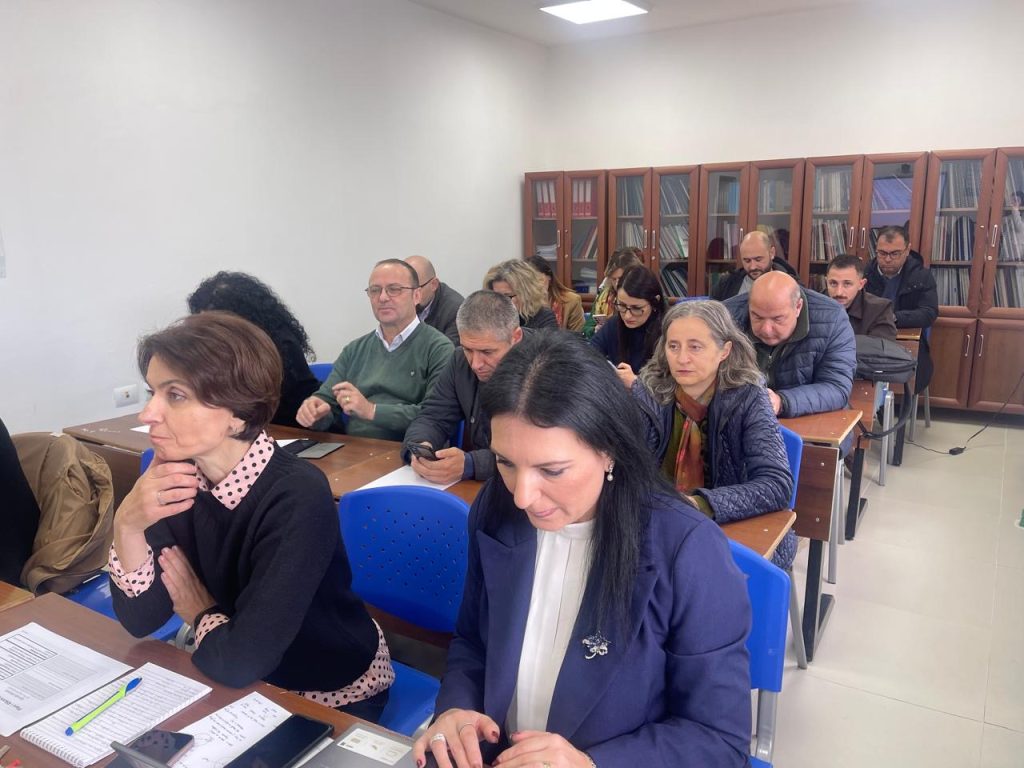
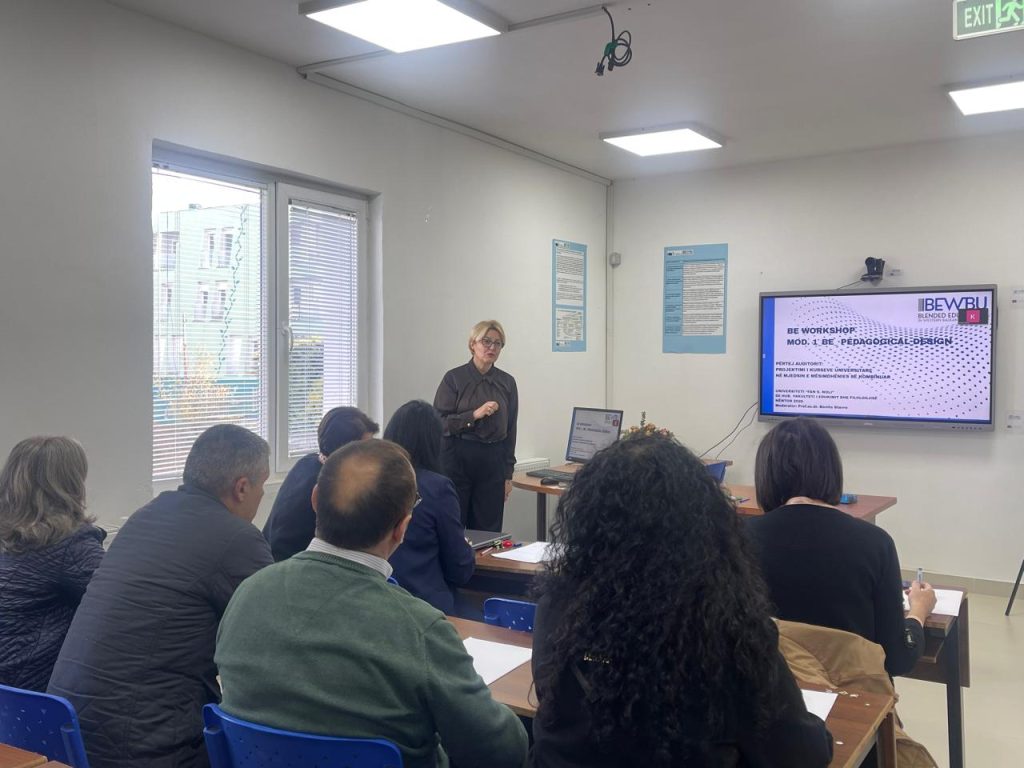
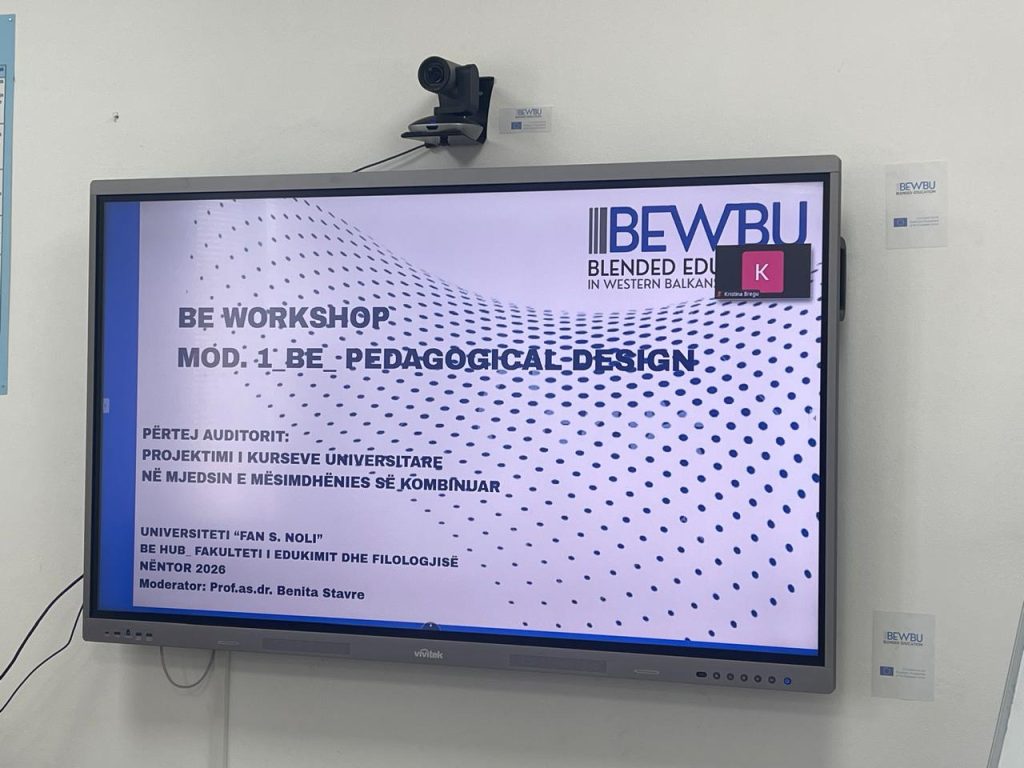
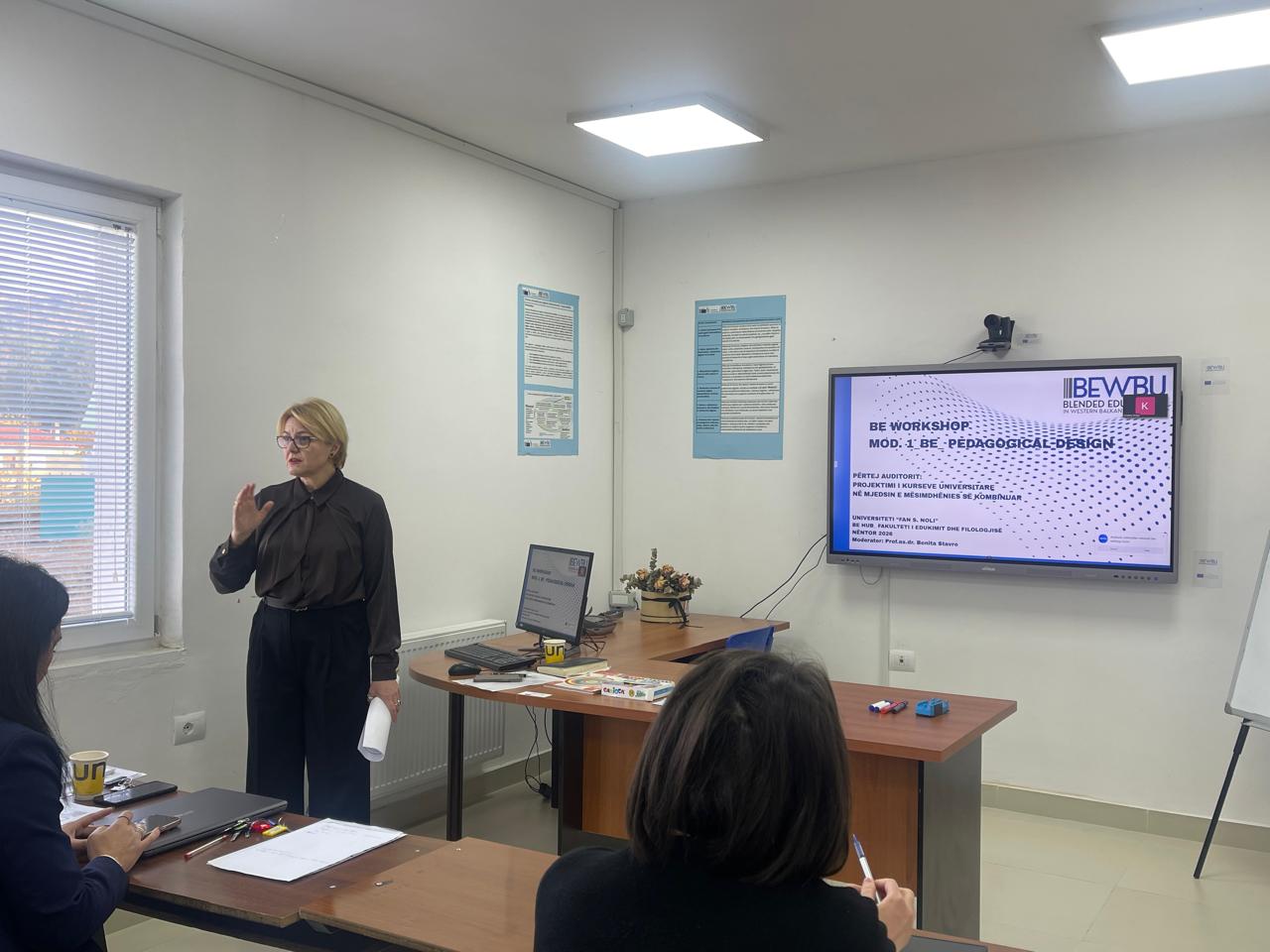
As part of the Erasmus+ funded project Blended Education in Western Balkans Universities (BEWBU), Fan S. Noli University in Korçë, Albania, organized a two-day training workshop entitled “Beyond the Classroom: Designing University Courses in a Blended Learning Environment.”
The training was organized by the Department of Foreign Languages through the university’s Blended Education Hub (BE HUB), within the framework of Work Package 3 (WP3), focusing on strengthening academic staff competences in the pedagogical design and implementation of blended learning.
The workshop aimed to enhance participants’ capacity to design student-centered university courses by effectively integrating face-to-face and online learning activities, digital technologies, student engagement strategies, and assessment practices.
Facilitated by Assoc. Prof. Dr. Benita Stavre, Dr. Suela Koça, and Dr. Lorena Robo, the training addressed three interconnected areas of blended education:
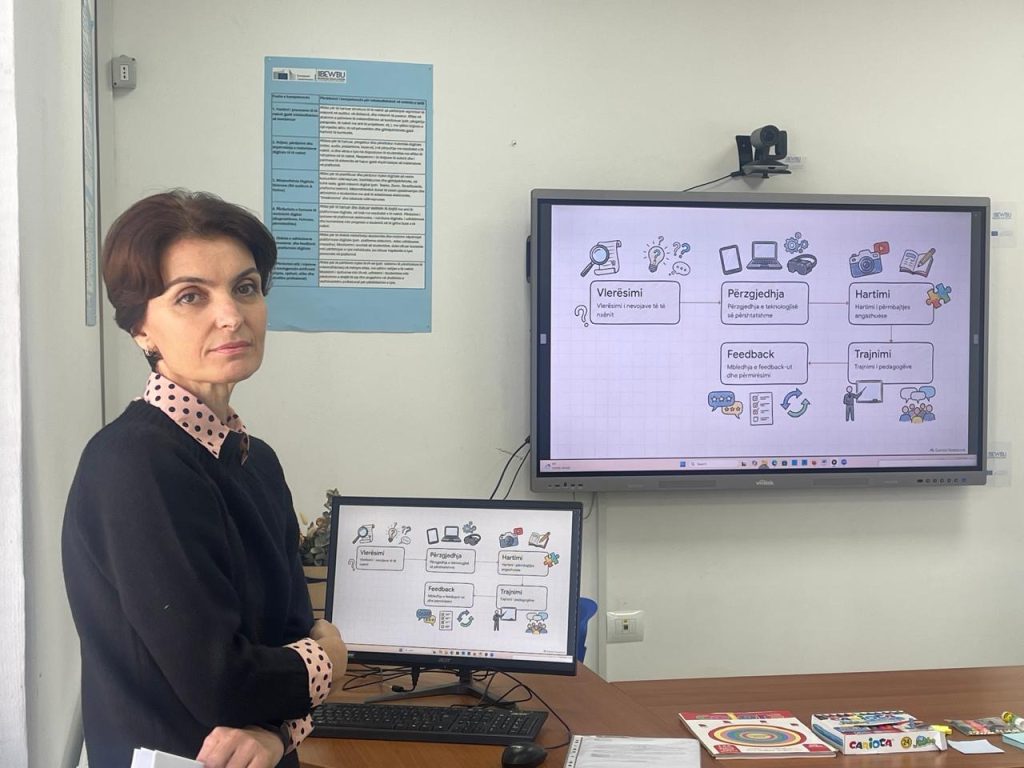
- Pedagogical Design for Blended Learning: Exploring innovative teaching approaches, including flipped classrooms, recorded lectures, hybrid participation, and the TPACK framework, with particular attention to inclusive and engaging learning environments.
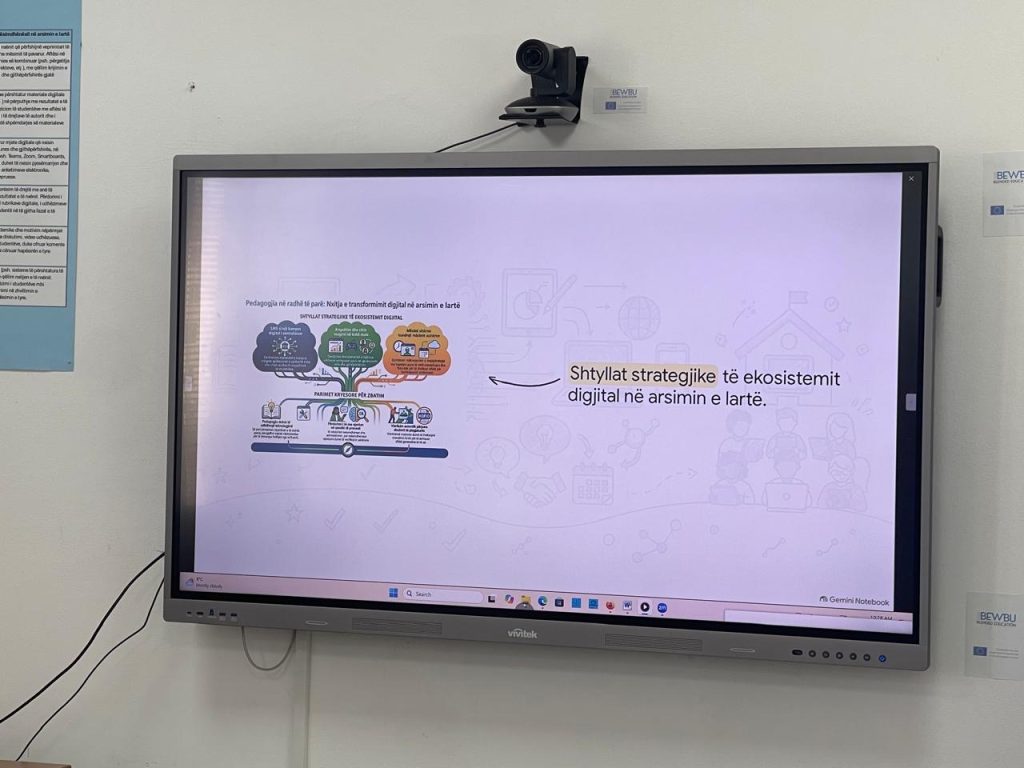
- Digital Tools and Artificial Intelligence in Teaching: Identifying and applying appropriate digital tools to support interactive learning, accessible educational materials, and the responsible integration of artificial intelligence into course planning and delivery.
- Assessment in Blended Learning Environments: Examining digital assessment platforms, academic integrity, formative assessment, peer assessment, and synchronous and asynchronous feedback mechanisms.
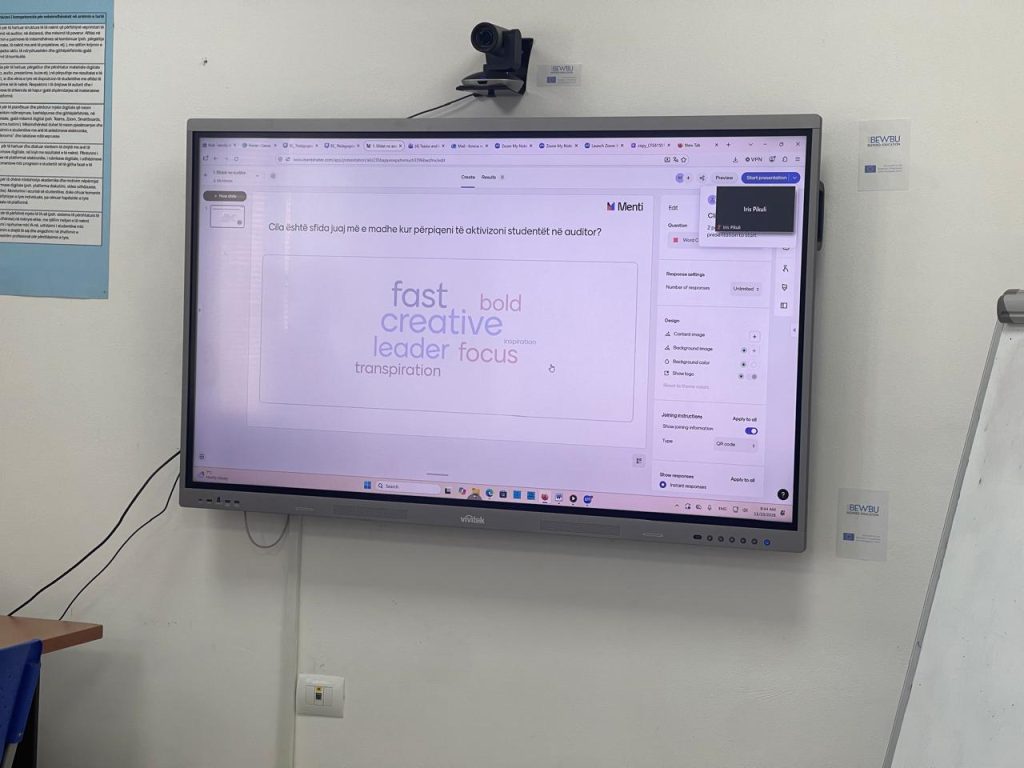
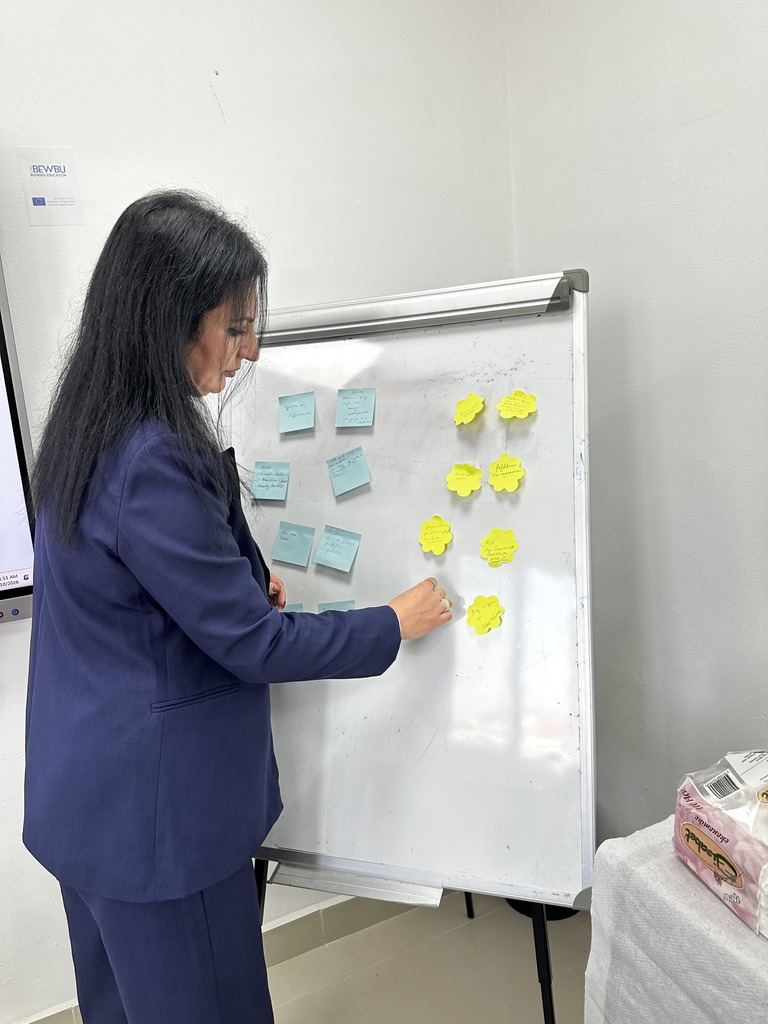
Through interactive presentations, case studies, collaborative discussions, and practical exercises, participants explored how to align learning outcomes with teaching activities and assessment methods across physical and digital learning environments.
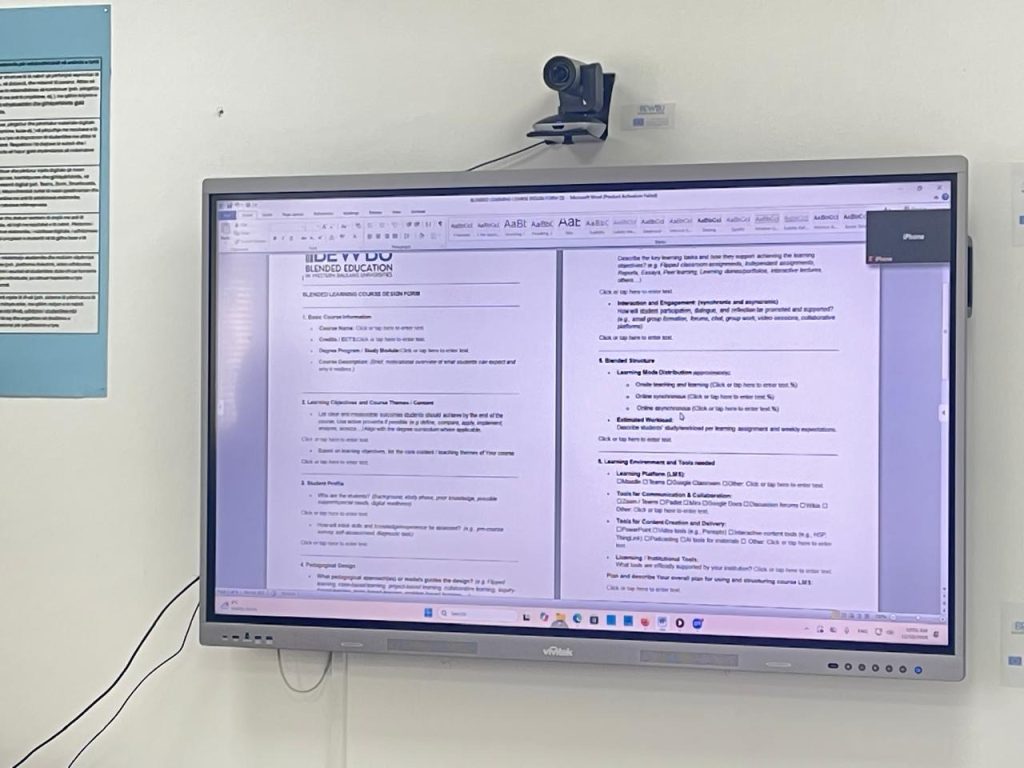
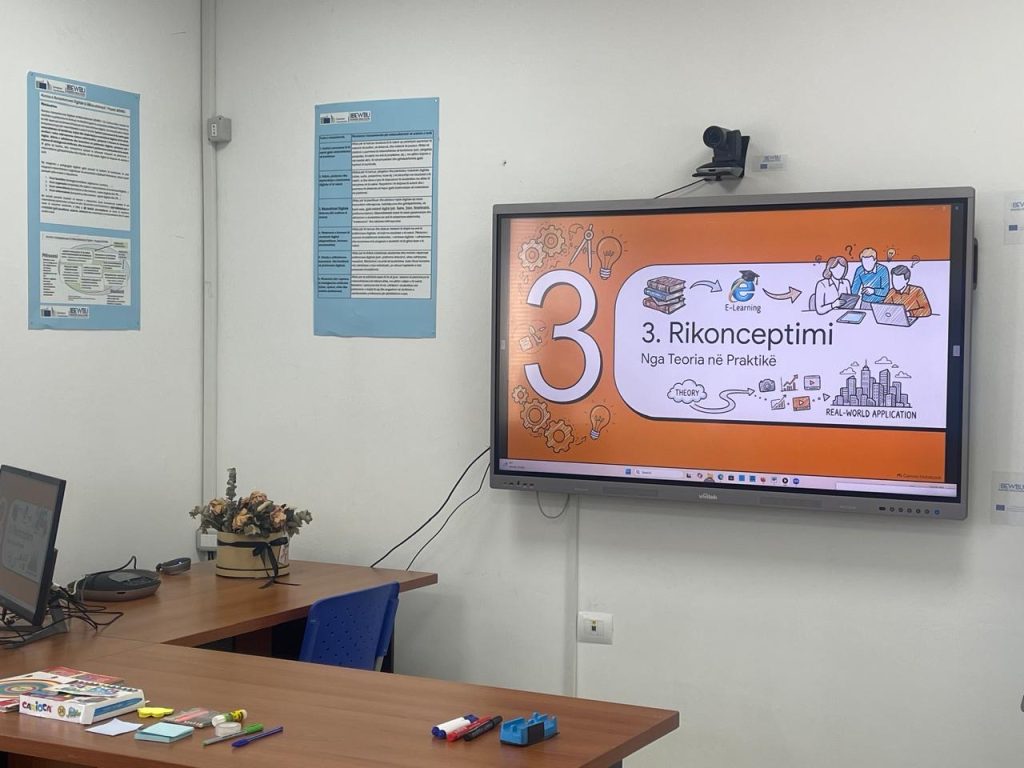
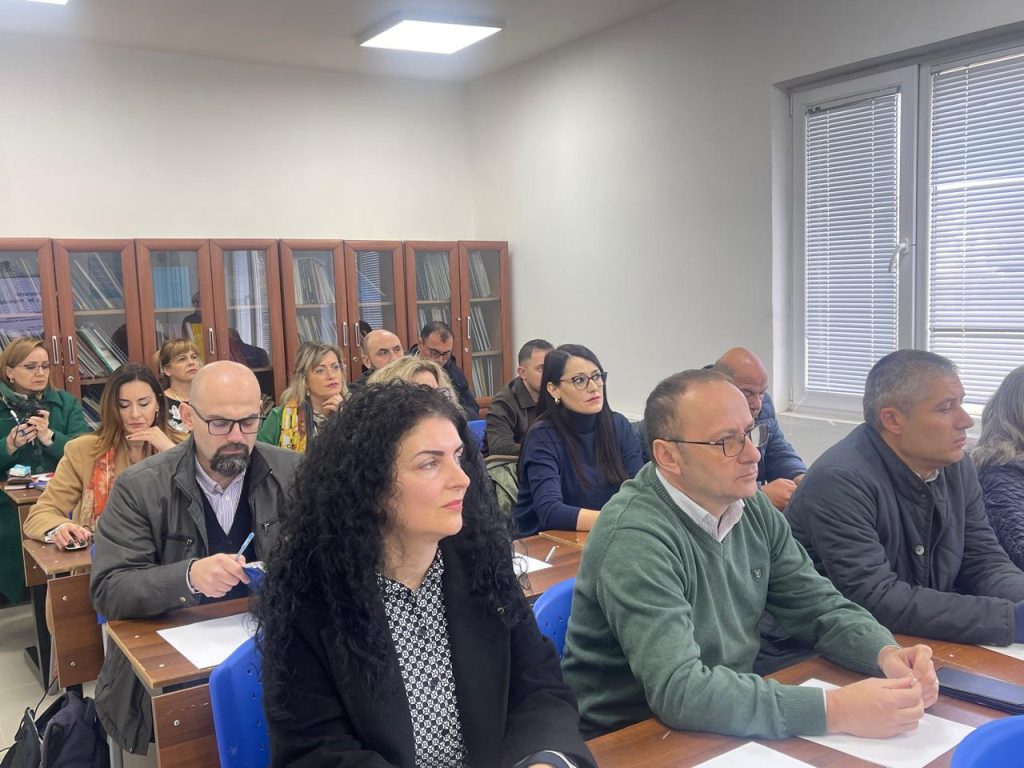
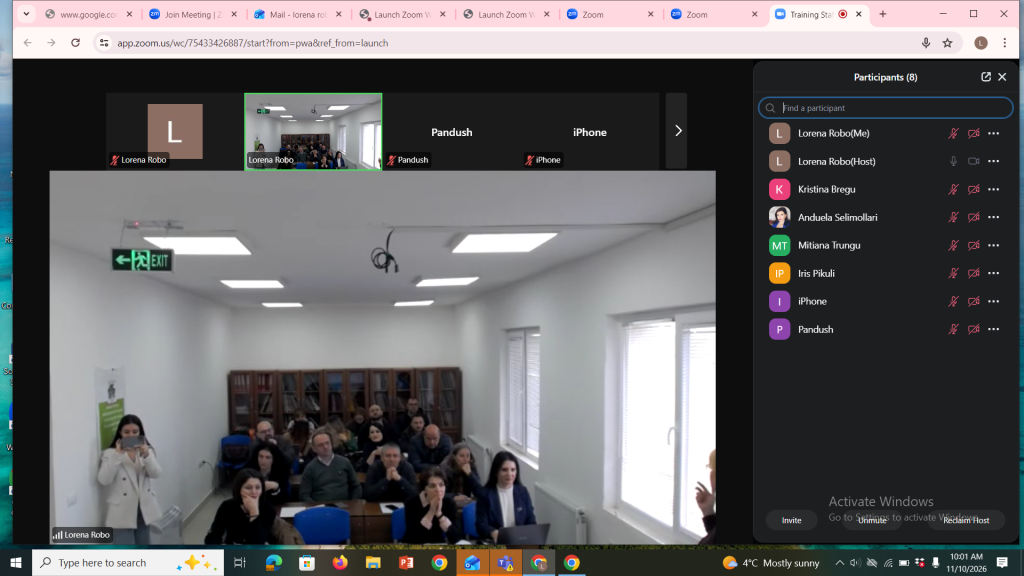
The first day focused on face-to-face training and hands-on activities at the BE HUB, while the second day was dedicated to independent asynchronous online work. Participants were guided in developing practical blended learning scenarios based on their own university courses, including the design of online activities, feedback mechanisms, and inclusive assessment strategies.
The workshop represents another important step toward achieving the objectives of the BEWBU project, particularly in supporting the digital transformation of higher education institutions in the Western Balkans and promoting innovative, flexible, and inclusive teaching practices.
Through capacity-building activities and the establishment of Blended Education Hubs, the BEWBU project contributes to strengthening institutional readiness for blended education, encouraging collaboration among partner universities, and improving the quality of teaching and learning across the region.
The BEWBU project is co-funded by the European Union through the Erasmus+ Programme.