
The Western Balkans region stands at a critical juncture in its educational evolution. The COVID-19 pandemic exposed deep vulnerabilities in higher education systems, revealing a lack of preparedness for large-scale digital transformation. Universities across Albania, Bosnia and Herzegovina, Montenegro, and Kosovo were compelled to adopt online learning almost overnight, often relying on ad hoc solutions and the existing digital skills of staff and students. While these efforts enabled continuity, they also highlighted significant gaps in pedagogical planning, digital infrastructure, and the integration of technology into teaching and learning.
As the world moves further into the digital age, the Western Balkans cannot afford to lag behind. Blended education, combining online and face-to-face learning and teaching offers a pathway to greater flexibility, inclusivity, and resilience. It enables universities to respond swiftly to future crises, democratise access to education, and equip graduates with the digital competencies demanded by the modern labour market. For the region, developing robust blended education models is not merely an option; it is a strategic imperative for social progress, economic competitiveness, and alignment with European standards.
The EMBED Model: A Blueprint for Maturity in Blended Education
Recognising these challenges, the BEWBU project (Blended Education in Western Balkans Universities) has placed the European Maturity Model for Blended Education (EMBED) at the heart of its strategy. Developed through a previous Erasmus+ initiative, the EMBED model provides a comprehensive framework for assessing and advancing blended education maturity within higher education institutions.
What is the EMBED Model?
The EMBED model is a diagnostic and developmental tool designed to help higher education institutions evaluate their current practices in blended education and chart a course for improvement. It encompasses a set of criteria and indicators that address institutional strategy, curriculum design, digital pedagogy, staff development, and student engagement. By applying the EMBED model, institutions can identify strengths and weaknesses, set realistic targets, and implement evidence-based interventions.
EMBED in Action: The BEWBU Approach
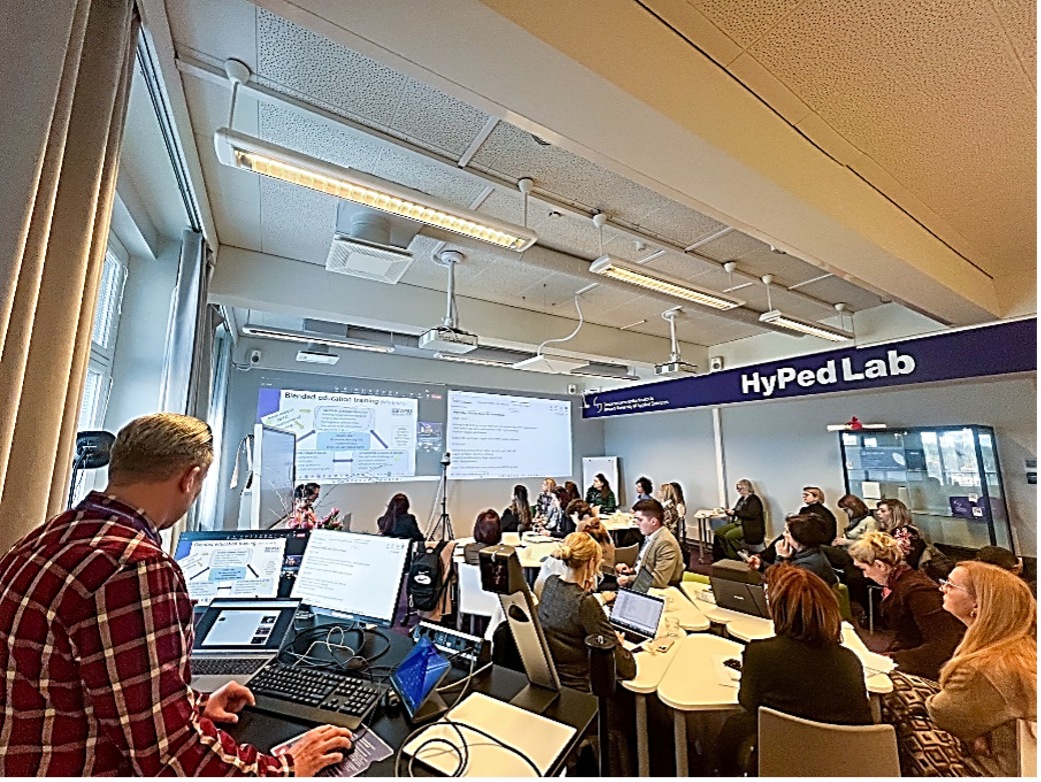
In the BEWBU project, the EMBED model is not just a theoretical reference, it is actively used to guide the transformation process. The consortium, which includes experienced partners such as Tampere University of Applied Sciences (TAMK), one of the originals EMBED developers leverages the model in several ways:
- Course design: EMBED principles underpin the redesign of curricula, ensuring that new blended courses are pedagogically sound, technologically robust, and aligned with both local needs and European best practices.
- Academic Staff Development: Training modules and workshops are partly structured around the competences identified in the EMBED model, supporting academic staff in adopting innovative blended teaching methods and digital tools.
- Quality BE Assurance: The EMBED framework provides benchmarks for monitoring progress, evaluating outcomes, and sustaining improvements beyond the project’s duration.
Why EMBED Matters for the Western Balkans
The EMBED model is particularly significant for the Western Balkans as it guides universities in aligning their educational reforms with European Union standards, making regional integration and qualification recognition more achievable. By providing clear maturity indicators, EMBED encourages institutions to base their decisions on evidence rather than tradition, ensuring that changes are both purposeful and effective. Its framework supports the development of policies and practices that can be scaled across different universities and sustained well into the future. Furthermore, EMBED’s emphasis on both digital and pedagogical competencies helps create inclusive learning environments and nurtures a culture of innovation, which is essential for the region’s ongoing educational transformation.
Conclusion
Blended education has become an essential requirement for the Western Balkans as the region strives to modernise its higher education sector and equip students for the demands of the digital era. The EMBED model provides a robust and proven blueprint for this transformation, enabling universities to progress beyond temporary emergency solutions towards strategic, sustainable change. Through initiatives such as BEWBU, the Western Balkans are well positioned to harness the potential of blended education, fostering institutions that are resilient, inclusive, and forward-looking, and ensuring full integration into the European educational landscape.
The Western Balkans urgently need to move beyond emergency digital solutions and adopt robust, strategic models for blended education. The EMBED model has a profound impact on transforming and modernising the national education system, driving quality, innovation, and long-term sustainability. This model also offers a comprehensive framework for this transformation, addressing institutional strategy, curriculum design, staff development, and quality assurance. Blended education is not just an option but a necessity for the region’s social and economic progress.The BEWBU project consortium looks forward with great anticipation to the advancements and innovations that will arise from the EMBED+ framework.
Authors:
Sanna Ruhalahti, Principal lecturer, Tampere University of Applied Sciences, Tampere, Finland
Elda Tartari, Associate Professor, Aleksander Moisiu University, Durres, Albania
Both authors are involved in the BEWBU project, with Dr Elda Tartari serving as the project manager.